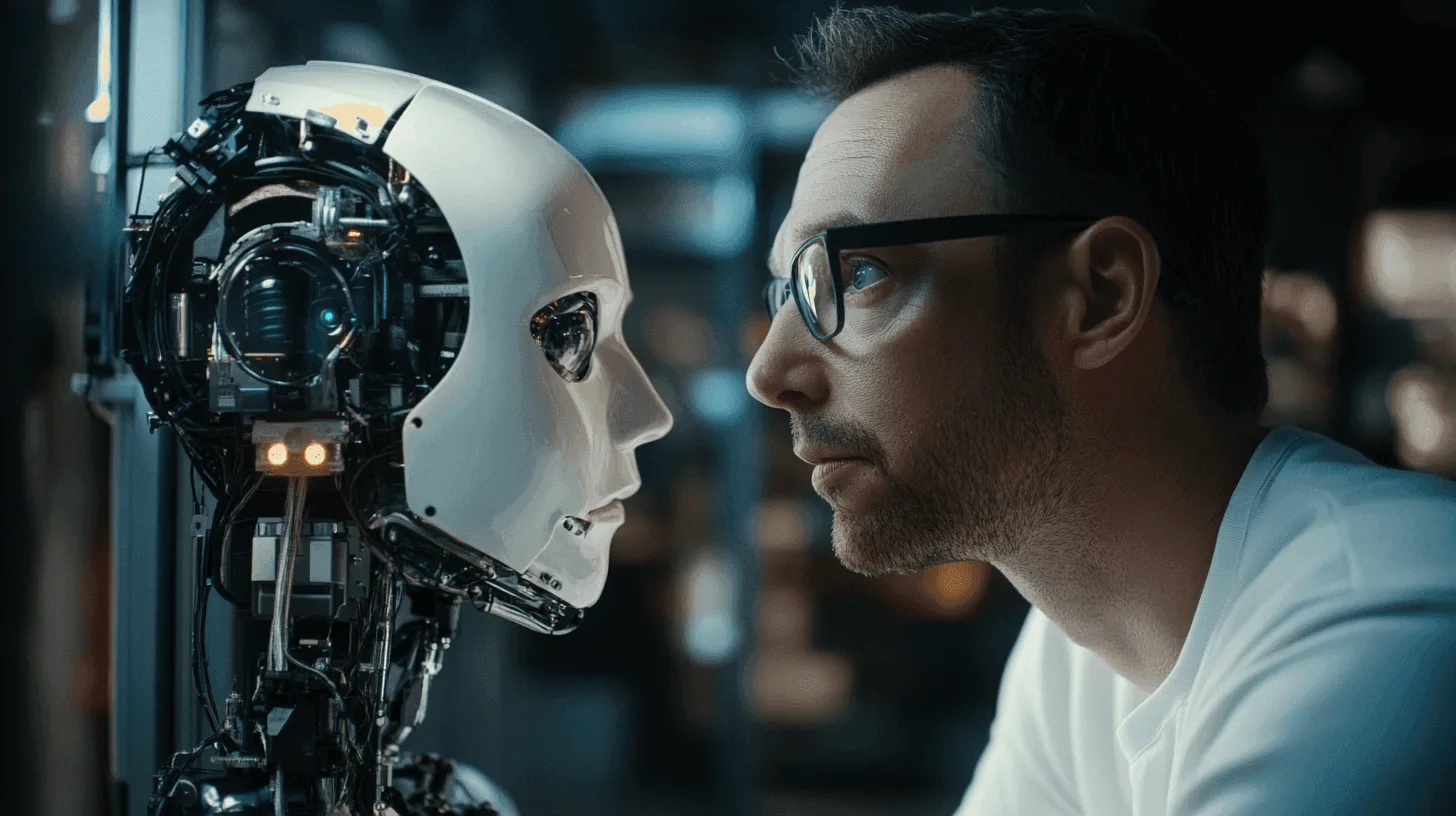
At some point in the last couple of years, a new colleague joined your workplace without anyone asking. It never takes a lunch break and writes surprisingly tidy meeting notes. It also, now and then, makes things up with complete confidence. It is AI, and depending on who you listen to, it will either free you from drudgery or put you out of work.
You have heard this before. Computers were going to give us a three-day week, and email was going to kill paperwork. So the useful question isn’t whether AI will change work. It’s which bits of your job it changes, and what you should do about it.

What AI at work actually looks like
Forget the humanoid robots. Most workplace AI today is generative AI, meaning software trained on huge amounts of text that can produce new text when you ask. It sits inside tools you already use. Microsoft’s Copilot lives in Word, Outlook and Teams. Google has built Gemini into Workspace. Then there are standalone chatbots such as ChatGPT, which plenty of staff use whether their employer knows or not.
The most useful UK evidence so far comes from Whitehall. In a large government trial of Microsoft 365 Copilot, civil servants said it saved them an average of 26 minutes a day. Most of that came from summarising long documents, drafting first versions of emails and reports, and writing up meetings.
Twenty-six minutes isn’t a revolution. Across a working year it does add up to more than a fortnight, though. It also shows what AI is good at today, which is the dull, wordy middle of office work rather than the bits that need judgement.
Which jobs are most at risk from AI?
This is where the story turns upside down. For decades automation came for factory and warehouse jobs first. Generative AI is aimed at people who sit at desks.
A Department for Education analysis of the UK labour market found that professional jobs are among the most exposed, particularly in finance, insurance, law and consultancy. Roles that involve a lot of writing, analysis and handling information score high. Manual and hands-on work, from plumbing to care, scores low. Your electrician’s job is safer from a chatbot than your accountant’s.
The think tank IPPR went further. In its worst-case scenario, up to eight million UK jobs could be disrupted as AI spreads. Back-office, entry-level and part-time roles would be hit first. Its best case was far gentler: jobs reshaped rather than lost, and productivity gains shared through better pay. Which way it goes, it argued, depends on choices made by government and employers.
Big employers are already planning around it. BT said in 2023 that it expected to cut up to 55,000 jobs by the end of the decade, and that around 10,000 of those could be replaced by AI and automation. That’s what replacement looks like in practice. It’s rarely a mass sacking. More often vacancies aren’t refilled, teams shrink and the work gets redistributed.
AI is unlikely to take your job tomorrow. A colleague who knows how to use it well might.
Is experience an advantage when it comes to AI?
Often, yes. That should cheer anyone over 45.
AI is very good at producing something plausible and not much good at knowing whether it’s right. Ask it to draft a contract clause, a client proposal or a risk assessment and you will get something fluent in seconds. Spotting the clause that will cause trouble in three years, or the client who will hate that tone, takes experience. That’s the part of the job you have spent decades learning.
Arguably, younger workers face the sharper squeeze. Junior roles have long been built on routine tasks like first drafts, research and data tidying, and those are exactly the tasks AI is now absorbing. If those rungs disappear, companies may value people who already know what good looks like. That’s you.
There’s a catch, mind. Experience is only an advantage if you’re seen to be using the new tools. The risk for older staff isn’t AI itself. It’s being quietly labelled as the person who won’t touch it.
Can my employer use AI to hire, monitor or sack me?
They can use it, but the law still applies. In Great Britain, the Equality Act 2010 makes age a protected characteristic, and that holds whether a decision is made by a manager or by software. If an AI screening tool filters out older applicants, the employer is still responsible. Northern Ireland has its own equality laws, including separate age discrimination rules, which give similar protection.
Data protection matters too. UK GDPR gives you rights over how your personal data is used, including rules on decisions made solely by automated means that have a significant effect on you. The Information Commissioner’s Office (ICO) regulates this. It has audited AI recruitment tools and raised concerns about some, including tools that tried to infer people’s characteristics from their names.
Monitoring is legal in principle, but it has to be proportionate. Employers should also tell you it’s happening. If you think software is tracking your keystrokes or scoring your performance without your knowledge, you are entitled to ask what data is collected and why. That’s a subject access request, and it’s free in most cases.
How to make AI work for you, not against you
First, find out your employer’s policy. Many organisations now say which AI tools are approved. Pasting confidential client data into a free chatbot is a quick way to have an awkward conversation with HR, and it could breach data protection rules.
Second, try it on the tasks you dislike. Ask it to summarise a dense report, turn bullet points into a first-draft email or explain a spreadsheet formula. Treat the output as the work of a keen but unreliable junior: useful, but check everything.
Third, be visibly good at it. Volunteer for the pilot, share what works and be the person who knows where it goes wrong. That combination of experience and fluency is hard to replace, by software or by a cheaper new hire.
Finally, keep some perspective. Spreadsheets didn’t abolish accountants and the internet didn’t abolish travel agents, though it thinned their ranks badly. AI will follow a similar pattern. Some roles will shrink, others will change, and some new ones will appear.
In short
For most people AI is, for now, more colleague than competitor. It’s good at drafting, summarising and admin, and UK trials suggest it saves time rather than replacing whole jobs. Office and professional roles are the most exposed, and entry-level work is changing fastest. Your best defence is to pair your experience with real skill at using the tools, and to know that equality and data protection law still apply when your employer uses AI.
Sources

Midcent Tech
Alex Innes explains technology for men 45 and over who have seen every gadget since the ZX Spectrum and are not easily impressed. AI and ChatGPT, phones, cars, the smart home, the subscriptions worth keeping and staying safe online – what it does, whether it's worth the money, and whether you need it at all.
One of Midcent's writers. Spotted something? Write to alex@midcent.uk.