Smartwatch makers are happy to sell you a titanium case, a sapphire screen and a price tag north of £400. Then most of us use the thing to check the time, see who’s messaging, count steps and find out how badly we slept.
So the useful question isn’t which smartwatch is best. It’s which one does the things you’ll actually use, for the least money, without leaving you charging it every night or wishing you’d bought something else. The good news is that the answer is cheaper than it was even two years ago.
What does a smartwatch actually need to do?
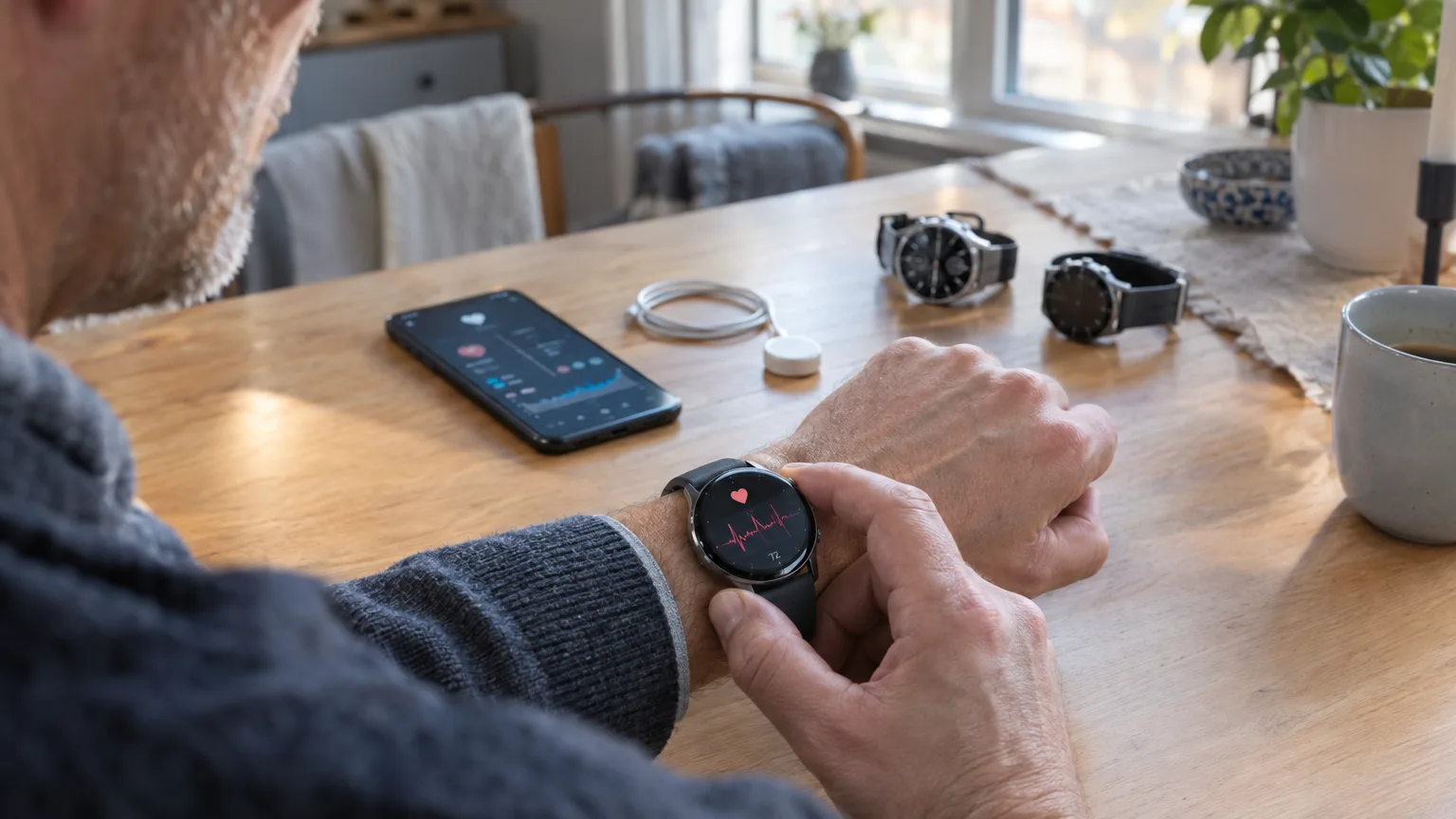
Be honest about what you’ll use. For most people it comes down to five things: notifications from your phone, step and activity counts, heart rate, sleep tracking and a decent battery. If you exercise, add built-in GPS, which means the watch can map a walk, run or bike ride without your phone in your pocket.
The extras are where the money goes. Contactless payment, mobile data so the watch works without your phone, an ECG (electrocardiogram, a quick heart-rhythm check), and the ability to install lots of third-party apps all push up the price. Some are genuinely useful. Plenty are things you’ll try once in the first week and then forget about.
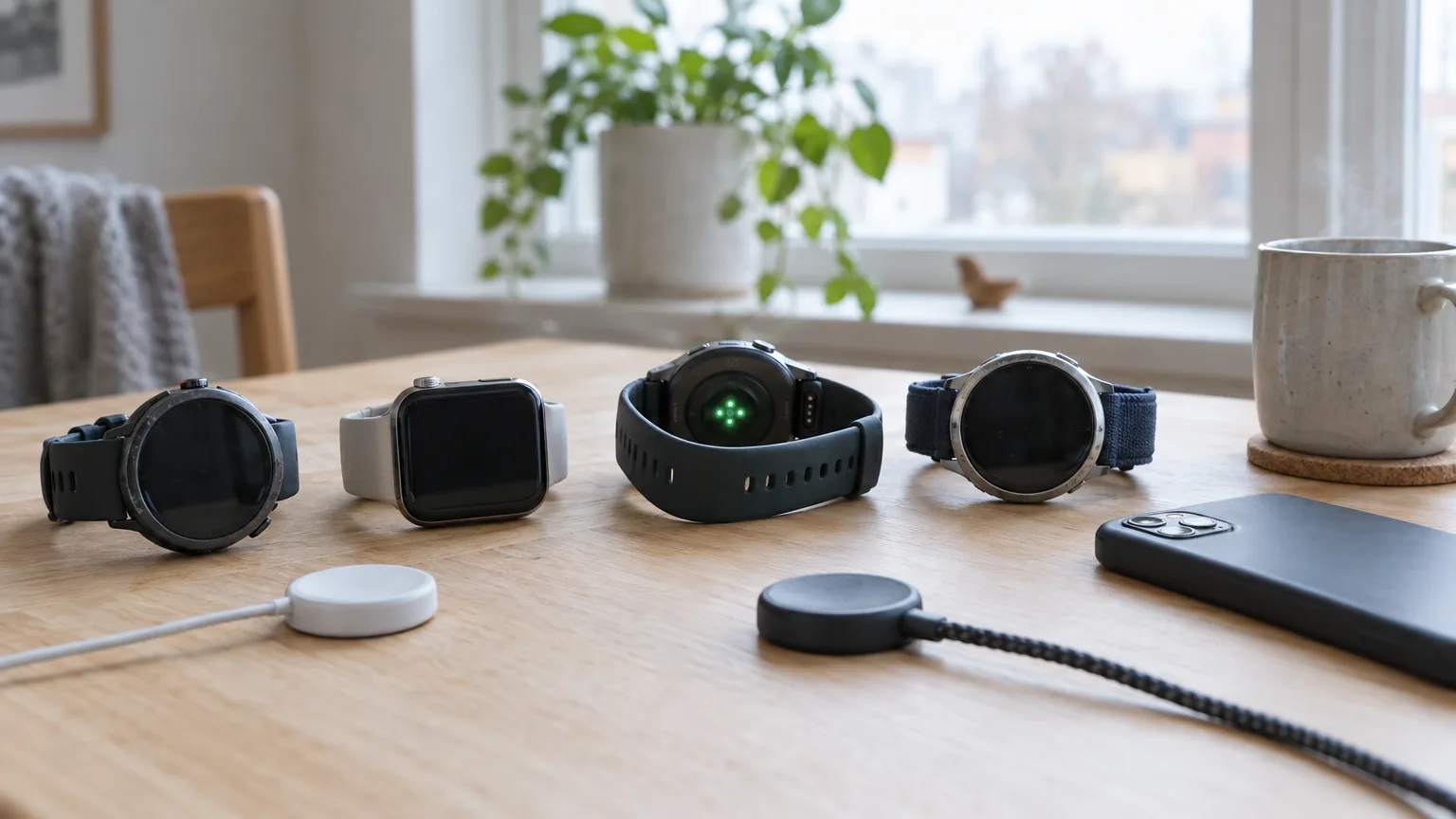
It also helps to know what kind of watch you want. A proper smartwatch, such as an Apple Watch or Samsung Galaxy Watch, behaves like a small computer on your wrist, but you charge it almost every day. A fitness-focused watch from Amazfit, Huawei or Garmin does less, and in return the battery lasts days or even weeks.
Which smartwatch gives the best value for money?
For most people who aren’t tied to an iPhone, the sweet spot is the budget fitness watch, and Amazfit is the brand that keeps undercutting pricier rivals. The Amazfit Bip 6 sells for under £100 and gets you a large, bright screen, built-in GPS, heart-rate and sleep tracking, water resistance for swimming and a battery that lasts days rather than hours. The specialist retailer Smartwatch Straps picks it as the best all-rounder under £100, and its strong point is that it covers the basics properly without making you squint at a tiny screen.
If you want something that looks less like gym kit, Trusted Reviews rates the CMF Watch 3 Pro, from Nothing’s cheaper sub-brand, as the best-designed budget option. It also gets praise for a clean interface and long battery life. Huawei’s Watch GT 5 costs more but earns the same reviewers’ praise for a slim, classy design and accurate heart-rate and GPS readings. It’s the one to choose if you want a watch you’d happily wear with a suit.
All three work with both iPhone and Android phones through their own apps, which matters if your household is split between the two.
The features you’ll use every day cost under £100. Most of what you pay on top of that buys features you’ll use once.
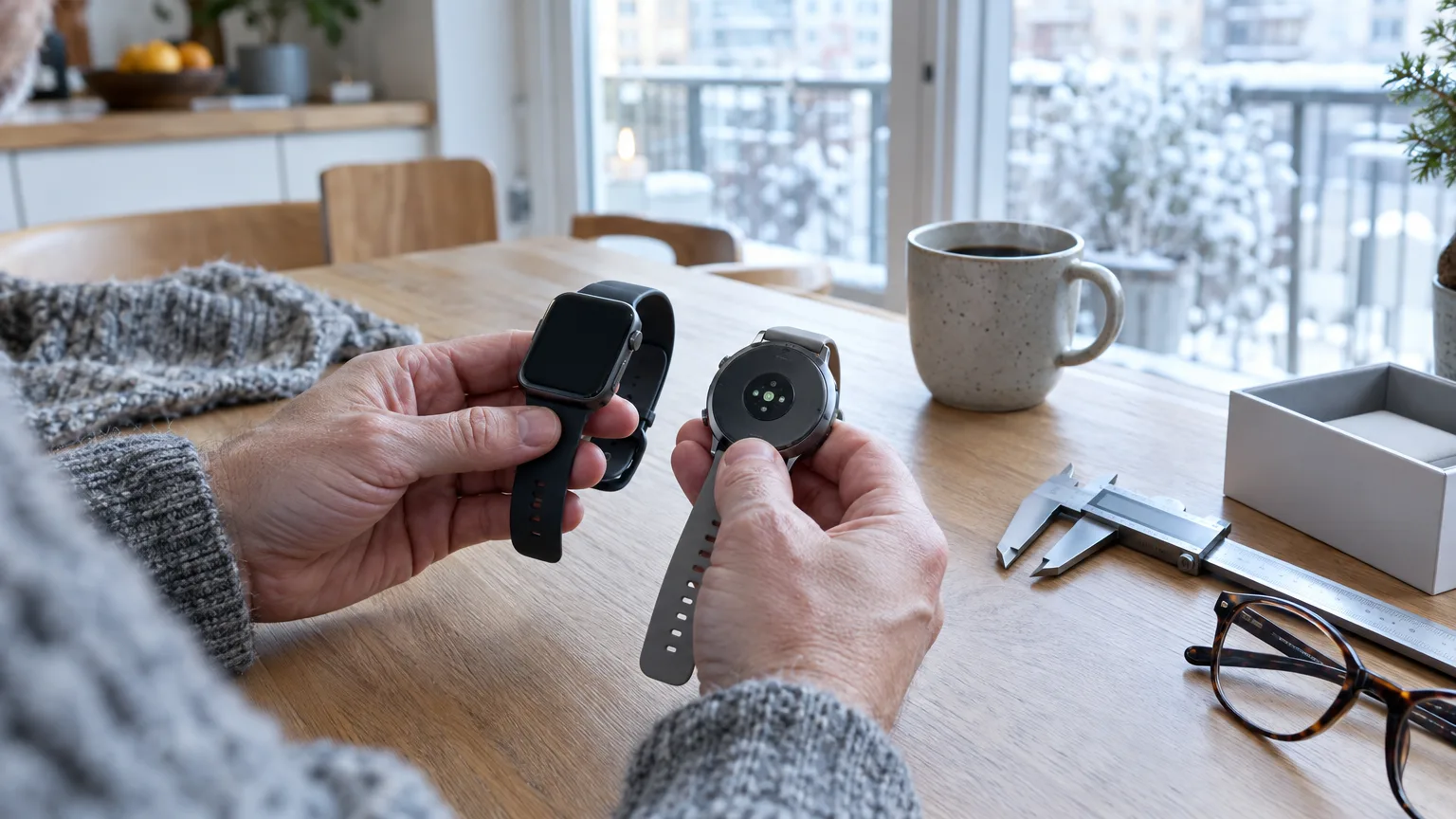
Is the Apple Watch SE worth it if you have an iPhone?
Here’s the catch the cheap watches won’t tell you: an Apple Watch only works with an iPhone, and the cheaper rivals never fit in with an iPhone quite as neatly. Replying to messages, Apple Pay at the till, unlocking your Mac and getting reliable notifications are all much smoother on Apple’s own watch.
If you’re an iPhone user, the sensible buy is the Apple Watch SE 3, Apple’s entry-level model, which launched in September 2025 from £219. You lose some of the health features on the more expensive Series models, but you get the core Apple Watch experience for a lot less. The downside is the battery. Like any full smartwatch, it needs charging most days, so if you want sleep tracking you’ll have to get into the habit of charging it while you shower or eat breakfast.
Android owners have a similar choice with Samsung’s Galaxy Watch range and Google’s Pixel Watch. They’re good watches, but at full price they’re hard to justify over a budget Amazfit unless you really want the full app store and smoothest Google integration. Look out for last year’s models being sold off cheaply when new ones arrive. A discounted previous-generation Galaxy Watch is often a far better deal than this year’s at launch price.
When is spending more worth it?
There’s one group for whom the extra money does pay off: people who exercise seriously. TechRadar calls the Garmin Forerunner 165, which launched at £249.99 and is regularly discounted, the best affordable Garmin. Garmin’s strengths are accurate GPS, detailed training data, battery life measured in days, and a companion app that tells you something useful about your recovery rather than just giving you a score. Trusted Reviews’ pick for the best cheap Garmin is the newer Forerunner 170 Music. If you’re training for a 10K or getting back on the bike, either is worth the step up.
For everyone else, the more expensive watches are mostly about polish, materials and brand. That’s a perfectly good reason to buy one if you can afford it. Just don’t expect it to make you any fitter.
What to check before you buy
Payments first. If tapping your wrist at the supermarket matters to you, check that your bank actually supports the watch’s payment system. Apple Pay and Google Wallet work with almost every major UK bank, but some budget brands support only a handful of banks, and some don’t offer payments at all.
Next, health readings. Blood oxygen, heart rhythm and sleep-stage figures are useful for spotting trends, but they’re not a medical diagnosis. If your watch flags something worrying, such as a persistently irregular heart rhythm, take it to your GP rather than doctor yourself from the app.
Then data. A smartwatch collects some of the most personal data you own, from your heart rate to where you go and when you sleep. Health data counts as special category data under UK GDPR, which gives you the right to ask a company what it holds about you and to have it deleted. Read the app’s privacy settings when you set it up, turn off anything you don’t need, and be careful about sharing workout maps publicly, because they show where you live.
Finally, think about how long it will be supported. A cheap watch that stops getting app updates in two years is a false economy. Buy a current model from an established brand, not a bargain-bin one that’s about to be discontinued.
In short
For most people, a budget fitness watch such as the Amazfit Bip 6 or CMF Watch 3 Pro gives you everything you’ll actually use for under £100, with far better battery life than pricier smartwatches. If you have an iPhone, the Apple Watch SE 3 from £219 is the best value, because rival watches don’t work as smoothly with iPhones. Spend more only if you train seriously, in which case an affordable Garmin earns its price.
Sources

Midcent Tech
Alex Innes explains technology for men 45 and over who have seen every gadget since the ZX Spectrum and are not easily impressed. AI and ChatGPT, phones, cars, the smart home, the subscriptions worth keeping and staying safe online – what it does, whether it's worth the money, and whether you need it at all.
One of Midcent's writers. Spotted something? Write to alex@midcent.uk.