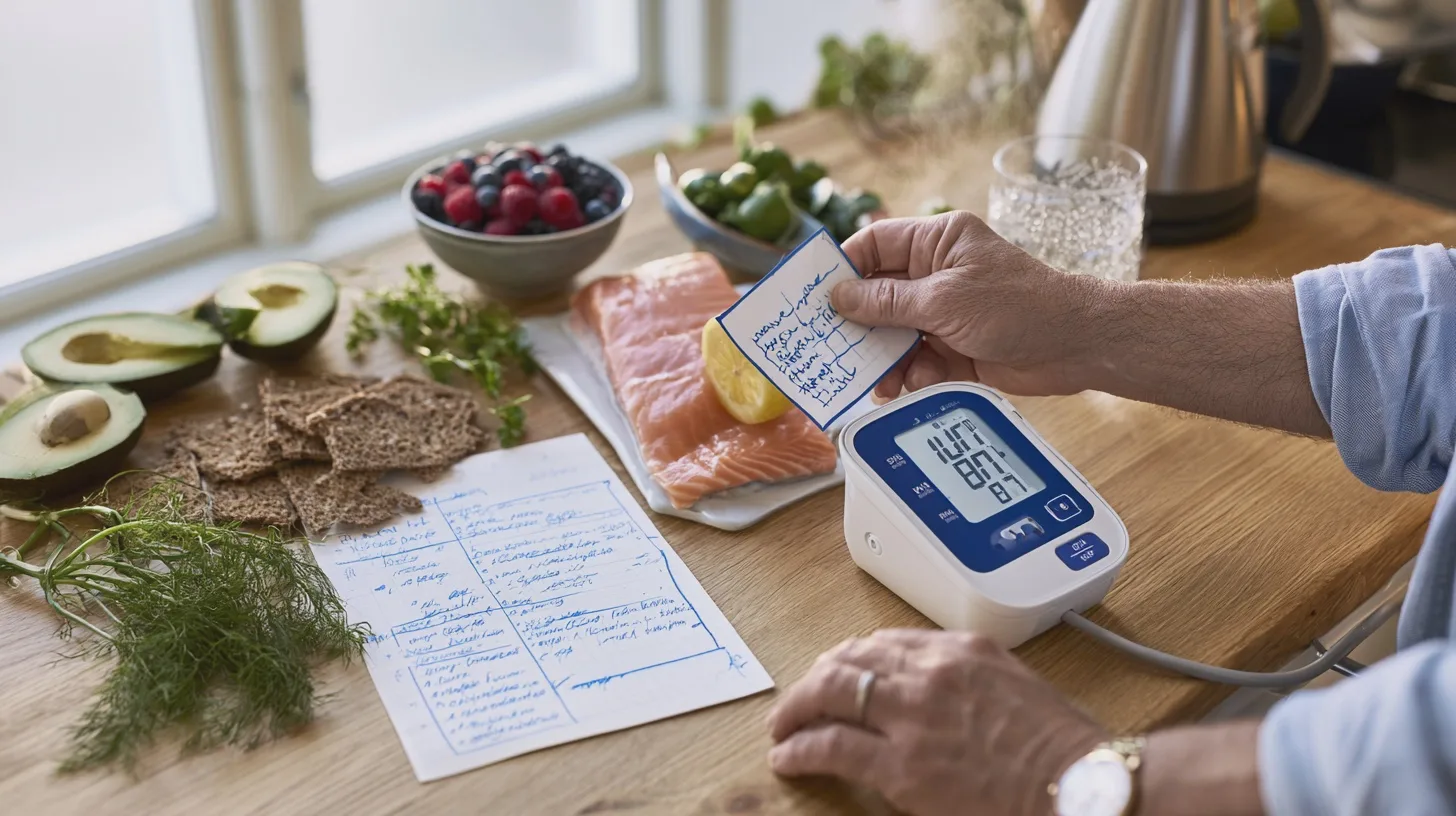
A raised cholesterol result is not a verdict on your diet. Here is how to read the numbers, spot possible inherited risk and decide what to ask your GP.
Reviewed, edited and approved by Editor-in-chief Daniel Sköld · Updated 23 October 2026
Contents
You get a blood test, see the word ‘high’ beside cholesterol and mentally review every sausage roll you have eaten since 1994. Fair enough. But the result is not a character reference, and one number cannot tell you whether the problem is lunch, your genes or something else.
The useful question is what that result means for your heart — and whether there is a family pattern worth investigating. Those are two related conversations, but they are not always the same one.
AD
What do your cholesterol numbers actually mean?
Cholesterol is a substance your body needs. Trouble starts when too much cholesterol carried in the blood contributes to fatty deposits in your arteries, raising the risk of a heart attack or stroke. High cholesterol usually causes no symptoms, so looking fit or feeling fine tells you remarkably little about your result.
In the UK, cholesterol is reported in mmol/L. A test may show total cholesterol, HDL cholesterol, non-HDL cholesterol, LDL cholesterol and triglycerides. HDL is often called ‘good’ cholesterol; LDL is the type especially associated with fatty build-up in arteries. Non-HDL is simply total cholesterol minus HDL, and includes LDL and other potentially harmful particles.
For generally healthy adults, the NHS gives guide levels of below 5 mmol/L for total cholesterol and below 4 mmol/L for non-HDL. HDL above 1.0 mmol/L is the guide for men. These are guides, not a pass-or-fail mark: the level that matters for you depends on your wider health and cardiovascular risk. If a message from your surgery gives only a total, ask for the full lipid results and what they mean in your case.
A cholesterol result also needs company: your blood pressure, smoking status, diabetes status, age and family history all affect the picture. Two men with the same total cholesterol could have quite different chances of developing cardiovascular disease. That is why a GP may be less interested in whether you have crossed a neat-looking line than in what happens when all your risks are considered together.
Could high cholesterol be inherited?
Yes — but ‘it runs in the family’ does not automatically mean you have familial hypercholesterolaemia, or FH. Families can share habits as well as genes. FH is a specific inherited condition that can leave LDL cholesterol high from birth, even if you eat well, exercise and have never knowingly approached a deep-fat fryer. The British Heart Foundation estimates it affects about one in 250 people.
This matters because a lifetime of exposure to high LDL can raise the risk of early heart disease. A father, mother, brother, sister or child with FH is an important clue; so is a close relative who had coronary heart disease unusually young. If one parent has FH, each child has a one-in-two chance of inheriting the gene change. There may be no outward signs at all.
NICE says clinicians should consider FH in an adult whose total cholesterol is above 7.5 mmol/L, or who has a personal or first-degree family history of coronary heart disease before age 60. Neither clue proves FH. A clinician will look at the full results and family history, consider other possible causes — including an underactive thyroid, diabetes and some medicines — and decide whether specialist assessment or genetic testing is appropriate.
A high cholesterol result is a reason to ask better questions, not a reason to blame yourself.
If FH is confirmed, specialist-led testing can help identify relatives who have inherited it. That includes younger family members, for whom finding out early can be especially useful. Treatment commonly involves cholesterol-lowering medicine as well as healthy habits. It is not a condition to tackle by seeing whether you can replace enough butter with olive oil.
AD
When does a QRISK score mean you need a statin?
For people without established cardiovascular disease, NICE recommends QRISK3 to estimate the chance of a cardiovascular event over the next 10 years. The calculation brings together factors such as cholesterol, blood pressure, smoking and medical history. Some GP computer systems may still use QRISK2 while they are updated. A score of 10% means an estimated 10 in 100 people with a similar risk profile would have a cardiovascular event over the next decade; it does not predict what will happen to you personally.
Under NICE guidance, clinicians should offer a statin for primary prevention when the 10-year QRISK score is 10% or more, following a discussion about benefits, risks and preferences. A lower score does not automatically rule one out if risk may be underestimated or you would prefer treatment after an informed conversation. Equally, a score is the start of a decision, not a prescription delivered by algorithm. Ask what your estimated risk is, what difference treatment might make for you, and how it would be monitored.
There is a crucial exception: QRISK is not the right yardstick for deciding whether someone with FH needs treatment. NICE considers people with FH already at high risk of premature coronary heart disease and gives separate treatment guidance. If you have had a heart attack, stroke or another cardiovascular condition, your treatment decisions also follow a different route from a routine primary-prevention score.
What can you change while the genes stay put?
Start with changes that have evidence behind them, not a cupboard of expensive supplements. Cutting back on saturated fat is a practical first move: think fewer sausages, meat pies, buttery pastries and large portions of cheese, with more wholegrains, beans, nuts, vegetables and unsaturated fats such as olive or rapeseed oil. You do not need to declare war on every enjoyable meal. Change what you eat most often.
Regular activity, not smoking and keeping alcohol within UK guidance also help reduce cardiovascular risk. The NHS suggests at least 150 minutes of moderate activity, such as brisk walking, each week. Activity is worth doing even if it does not produce the dramatic cholesterol-number makeover promised by a fitness advert. If you smoke, getting help to stop is far more useful than searching for a ‘cholesterol detox’.
Need a starting point? In England, eligible adults aged 40 to 74 are invited for a free NHS Health Check every five years. It includes an assessment of cardiovascular risk, but it is not for people already receiving care for certain conditions, including diagnosed FH, or those taking statins. If you think you are eligible and have not been invited, contact your GP practice. That particular programme is for England: in Scotland, Wales and Northern Ireland, ask your GP practice about cholesterol testing and a cardiovascular risk assessment, particularly if you have a strong family history. Services and invitations are not identical across the four nations.
Bring your previous results, if you have them, and find out how old relatives were when they developed heart disease. Tell your GP about any medicines you take rather than changing them yourself. If a result worries you, arrange a proper discussion; if you need urgent advice, use NHS 111. Sudden symptoms that could be a heart attack or stroke need 999, not another look at your cholesterol app.
In short
High cholesterol can reflect diet, other health conditions, inherited risk or a mixture of these; a single result cannot tell you which. Ask for your full lipid results and an assessment of your wider heart risk. Very high cholesterol or early heart disease in close relatives deserves a conversation with your GP about familial hypercholesterolaemia, because an ordinary QRISK score does not settle that question.
Adrian Irving writes about health for men 45 and over who would rather do something than worry. Training, weight loss, sleep, cholesterol and blood tests, heart health, testosterone, the prostate, mental health and your sex life – what the evidence says, what's worth trying, and when it's time to see your GP.
One of Midcent's writers. Spotted something? Write to adrian@midcent.uk.
A high cholesterol result is not a verdict. Here is how to read the numbers, understand your QRISK3 score and decide what is worth discussing with your GP.
More than half the calories in the average British diet come from ultra-processed food. Here’s what the evidence really shows, and how to cut back without a bonfire of the cupboards.