Reviewed, edited and approved by Editor-in-chief Daniel Sköld · Updated 22 October 2026
Contents
A solar panel on a caravan sounds like an excellent way to escape the electric hook-up queue. Park somewhere quiet, put the kettle on and let the roof do the work. Unfortunately, the roof has not met your kettle.
Solar is useful, particularly if you favour basic pitches or store your caravan away from mains electricity. Whether it is worth buying depends less on the panel’s impressive-looking wattage than on what you expect it to power, where you park and the state of your leisure battery.
AD
What can a caravan solar panel actually power?
Think of a caravan panel as a battery charger, not a miniature power station. It turns daylight into direct-current electricity and feeds your 12-volt leisure battery. That battery then runs equipment such as lights, the water pump, a suitable television and the controls or fan used by some heating systems.
This distinction matters after sunset. You are using electricity stored earlier, not drawing it from the panel. A kettle, toaster or hairdryer designed for a household socket is a different proposition. To run a 230-volt appliance from the battery, you need an inverter, which converts the battery’s direct current into the alternating current used by household plugs. Conversion wastes some energy, and high-power appliances can empty a modest battery remarkably quickly.
For a summer weekend on a basic pitch, solar can help you avoid running short of 12-volt power. It may also maintain a battery while the caravan is in storage, particularly if an alarm needs power. Neither job is guaranteed: winter days are short, and a roof panel under a caravan cover produces precious little. If you normally book a hook-up and want your usual electrical comforts, buying solar chiefly to save money is a questionable bet.
How much solar do you need for a weekend away?
Start with what you use, not the largest panel that fits between the rooflights. Add up the wattage of your 12-volt equipment and how long you run it each day. Divide watts by roughly 12 to estimate the current in amps; multiply by hours to get amp-hours, a useful way to compare daily demand with battery capacity. For illustration, a 24-watt appliance running for three hours uses roughly six amp-hours. Your real tally depends on your own kit.
Then look at the battery. Its amp-hour rating is not a promise that you can use every last amp-hour: regularly running a lead-acid leisure battery flat can damage it. An ageing battery will not be rescued by buying a bigger panel. Check its condition and fully charge it before judging what a solar upgrade might achieve.
The Caravan and Motorhome Club suggests a panel of around 100 watts or more to extend time off-grid with a sound battery. That is a useful starting point, not a guarantee of endless summer evenings. A panel’s wattage is measured under standard test conditions; clouds, shade, season and positioning change what you actually collect. A small panel may be enough for maintenance charging but disappoint badly if you expect it to support a television and other equipment through a long weekend.
A caravan solar panel does not replace the battery. It buys the battery more time.
Before spending anything, try one trip with a fully charged battery and the hook-up disconnected, using the caravan as you normally would. Monitor how it copes, then recharge promptly afterwards. That tells you more about your needs than a kit described as ‘off-grid ready’.
AD
Roof-mounted or portable: which is the better buy?
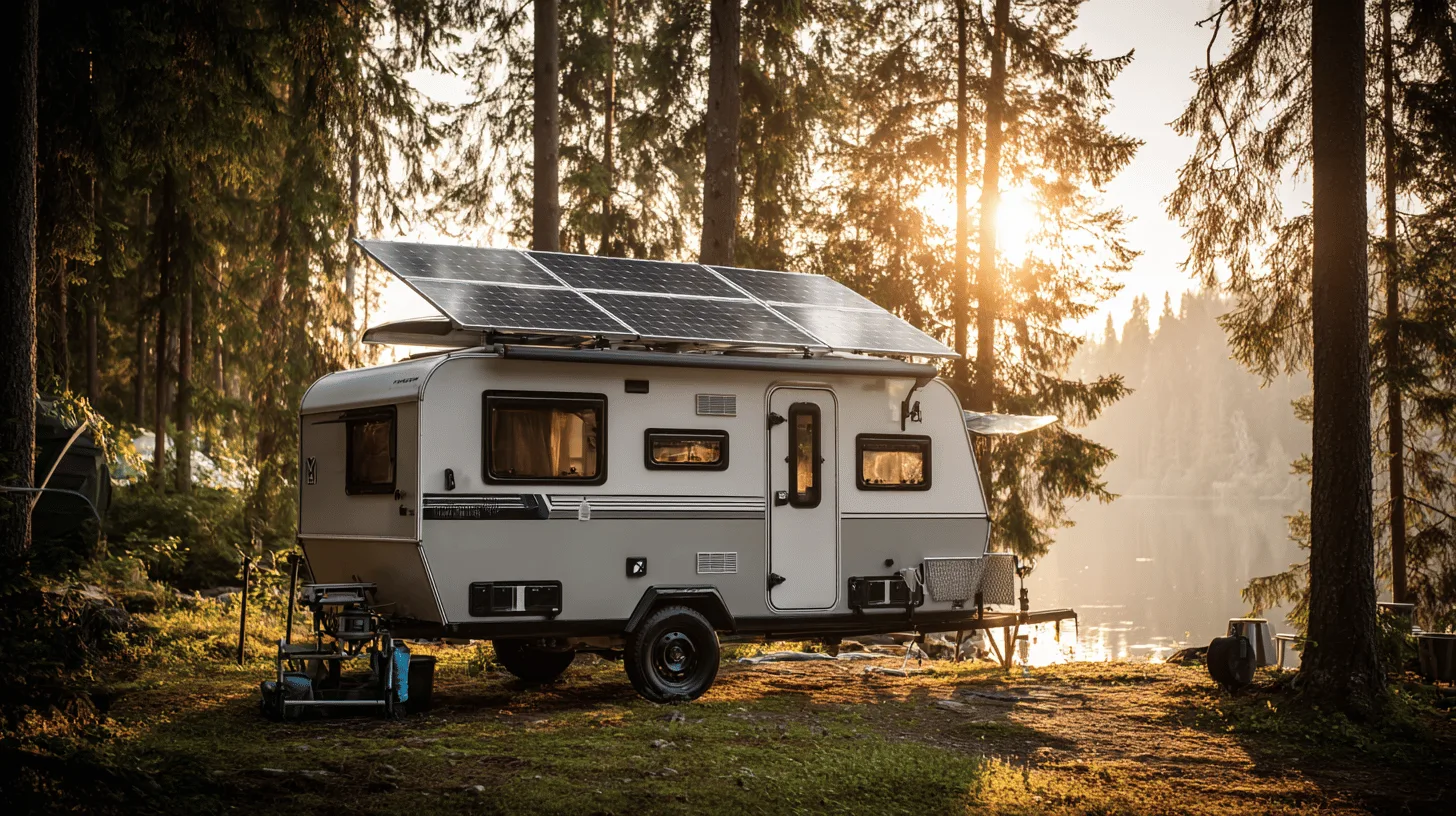
A fixed panel is convenient: it charges without being unpacked and can keep working when the caravan is stored outdoors. But your pitch dictates its angle, and an aerial, rooflight, tree or neighbouring outfit may cast a costly shadow. A cover blocks the light altogether. Roof fitting can also involve cable entry and sealing, so check the manufacturer’s water-ingress warranty before anyone starts drilling.
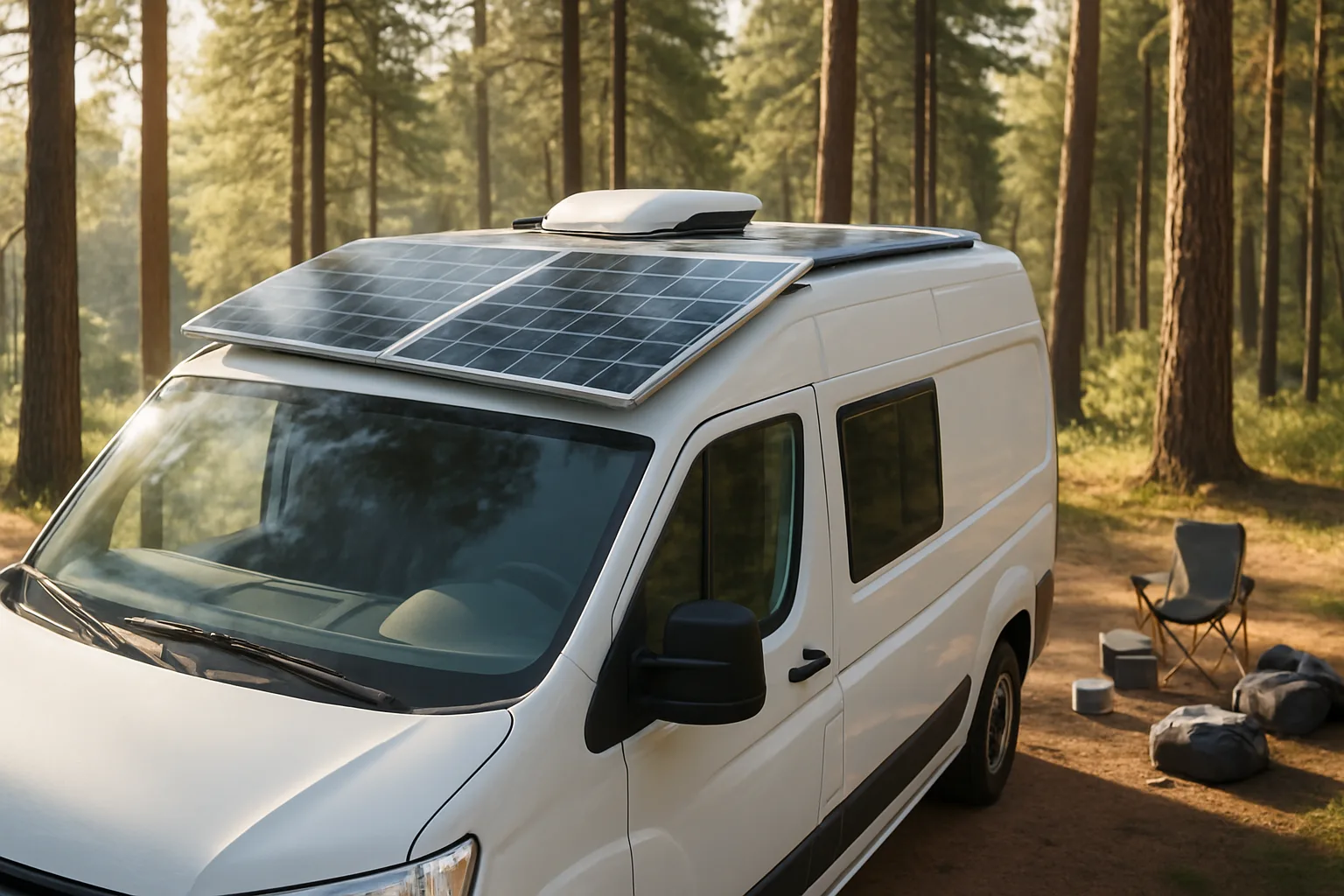
A folding panel lets you park the caravan in the shade and put the panel in better light, then adjust its angle as the sun moves. It is also easier to try solar without permanently altering the caravan. The price of that flexibility is a bit of daily faff: unpacking it, keeping its cable tidy, securing it against theft and bringing it in when you leave.
For a price marker rather than a promise, the Caravan and Motorhome Club’s buying guide puts fixed 100-watt kits from around £200 and folding 100-watt kits at £380 or more. Check exactly what is in the box. A panel alone is not the finished system: a suitable charge controller, connectors, cabling and, for a fixed panel, professional fitting can change the total considerably. Compare complete quotes, not just headline panel prices.
If you tour regularly without a hook-up and want no set-up routine, fixed has the stronger case. If you are curious but not committed, a portable kit is a sensible trial provided you are happy to handle and secure it. Neither option is much use if your favourite pitch spends the afternoon under an oak tree.
The mistakes that turn useful kit into a bill
The first is omitting the charge controller. This sits between panel and battery and manages charging so the battery is not overcharged. Many kits include one, but check. A basic pulse-width modulation controller, often labelled PWM, can do the job; a maximum power point tracking controller, or MPPT, extracts more usable output from the panel and is worth considering when light is variable. Make sure whichever you choose supports your battery type and the proposed panel.
The second is treating 12-volt wiring as harmless because it is low voltage. A battery can deliver enough current through a fault to overheat wiring. The Camping and Caravanning Club advises a correctly specified fuse close to the battery, appropriate cabling and sound connections. If you are uncertain about installation, use a competent caravan workshop rather than learning electrical fault-finding inside a confined space.
The third is forgetting that added equipment has weight. A fixed panel and any battery upgrade eat into a caravan’s payload: the allowance for what you add beyond its standard specification. Check the plated maximum technically permissible laden mass, or MTPLM, before loading up. As at October 2026, guidance for Great Britain says the tow car’s gross train weight must not be exceeded; Northern Ireland publishes its own towing guidance and also directs drivers to the vehicle’s towing limits. The practical answer everywhere is to check both the caravan and car plates, not assume a roof accessory is too light to matter.
Finally, tell your caravan cover or insurance provider about the installation and check that the new equipment is included. Keep the panel clean, inspect its fixings and connections, and remember that solar in a British winter is a backup plan, not a promise. The clever purchase is the one sized for the trips you actually take.
In short
A caravan solar panel is worth considering if you regularly use pitches without a hook-up or need to maintain a battery in uncovered storage. Around 100 watts is a reasonable starting point for extending summer off-grid trips, but output depends on light, positioning and battery health. If you mostly use mains-powered appliances on hook-up pitches, save your money unless your habits change.
Alex Innes explains technology for men 45 and over who have seen every gadget since the ZX Spectrum and are not easily impressed. AI and ChatGPT, phones, cars, the smart home, the subscriptions worth keeping and staying safe online – what it does, whether it's worth the money, and whether you need it at all.
One of Midcent's writers. Spotted something? Write to alex@midcent.uk.
Soil tests and wireless moisture sensors promise a perfect lawn without the guesswork. Here is what they actually measure, what you can skip, and when a trowel is enough.
Smart indoor gardens promise fresh herbs and salad on a worktop, with automatic lights and watering. What the kit actually does, what it costs to run and who should buy one.
A big soundbar or a proper surround system with wires everywhere? Here’s what each one actually gets you, what it costs in pounds and which suits your living room.
8K TVs pack four times the pixels of 4K, but Cambridge research suggests most of us can’t see them from the sofa. Here’s where your money should go instead.