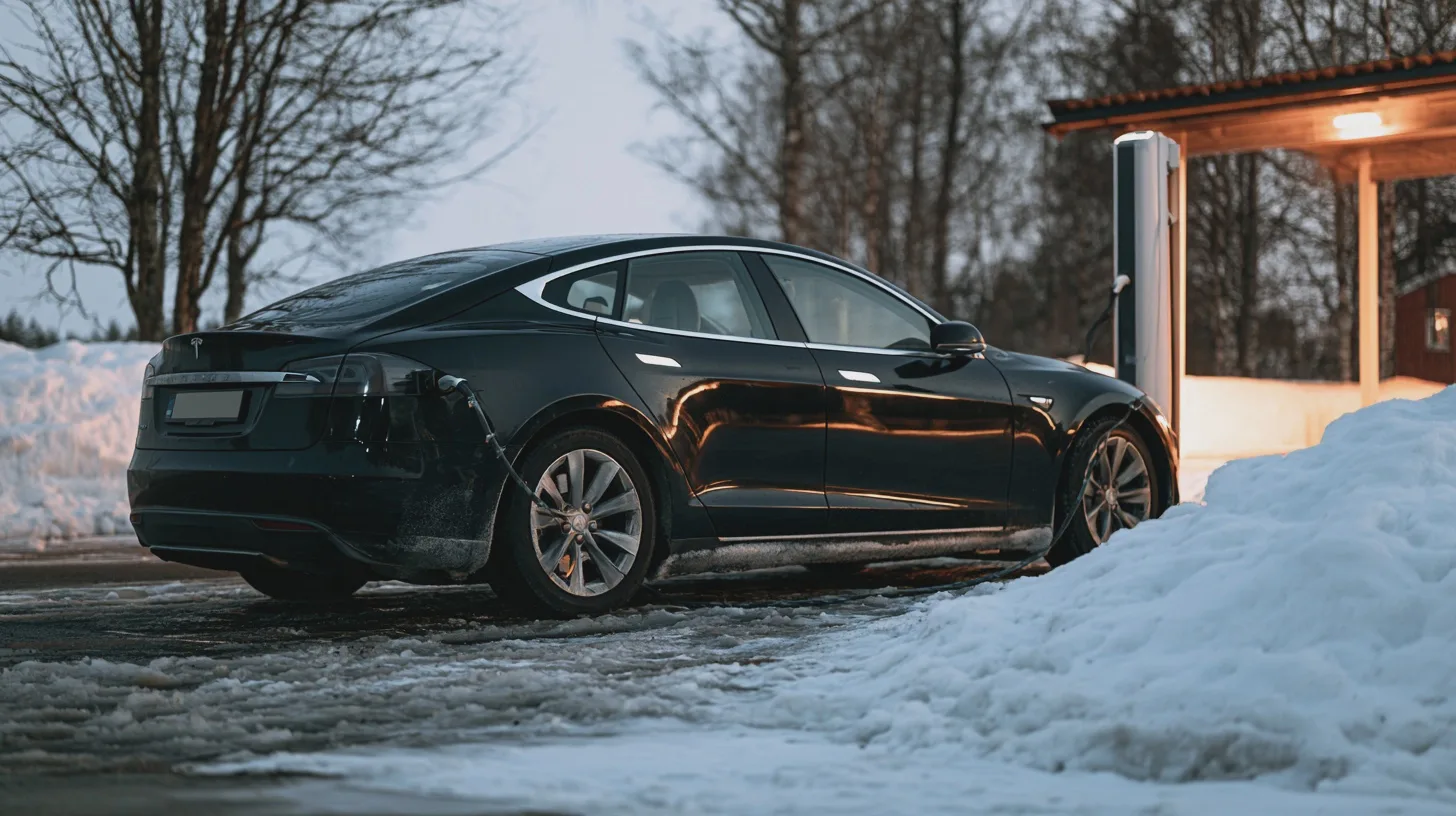
Buying a used electric car? Check more than the battery
Used electric cars look cheap, but battery health, range in winter, warranty terms and where you’ll charge decide whether you’ve got a bargain. Here are the checks to do first.
Reviewed, edited and approved by Editor-in-chief Daniel Sköld · Updated 26 October 2026
Contents
The advert says 250 miles of range. The price is about half what the car cost three years ago. The seller is friendly, the paintwork is spotless and the dashboard shows 80% charge. You start working out what you’ll save on petrol.
Hold that thought. With a used electric car, the expensive problems hide where you can’t see them: in the battery, in the small print of the warranty and in a frosty January morning on the M6. Here’s how to tell a good buy from a costly one before any money changes hands.
AD
How do I check the battery health on a used electric car?
The figure you want is state of health, usually shortened to SoH. It tells you how much of the battery’s original capacity is left, as a percentage. It is not the same as the charge level on the dashboard, which only shows how full the battery is right now.
You can get the figure in three main ways. Some cars show it in a menu on the dashboard or in the maker’s app, so ask the seller to log in and show you. Franchised dealers can run a diagnostic report with the manufacturer’s own equipment. Independent battery health tests are also available from specialist firms, using a plug-in reader and a short drive.
As a rough guide, 90% or more is excellent for a car that is three to five years old, and 85% to 90% is normal wear. Below 80%, expect to notice the lost range. If a dealer won’t give you a battery report, ask yourself why.
Ask how the car has been charged, too. A car charged slowly overnight at home usually ages better than one that has lived on rapid chargers. Some older models, including early Nissan Leafs, have no active battery cooling, which makes them more sensitive to heat and repeated fast charging.
What does the battery warranty actually cover?
Most electric cars come with a battery warranty separate from the main car warranty. It commonly runs for eight years or 100,000 miles, whichever comes first, and it normally passes to the next owner. So a car first registered five years ago may still have three years of battery cover left.
Read the detail, though. Many battery warranties don’t promise the battery will stay as good as new. They pay out only if capacity falls below a set level, often around 70%. A battery at 75% is legal, covered and noticeably worse than it was. Check the exact terms for that car using its registration or VIN, and find out whether the warranty depends on the car being serviced at the maker’s dealers.
With a used electric car, the battery report is the service history. Don’t buy one without it.
If you buy from a dealer, ask whether their own used-car warranty covers the high-voltage battery and the motor, or just the usual parts. Extended warranties vary a lot, and some exclude the very parts you’re most worried about.
How much range will a used EV really have in winter?
The official range on a used car’s advert is the figure from when it was new, measured in lab tests. Real life takes a bite out of it. Cold weather takes a bigger one: the battery works less efficiently and the heating draws power, so a winter motorway run can easily return a fifth less range than summer pottering about town.
Do the sums for your own car. Say it was rated at 250 miles new and the battery is now at 88%. That leaves about 220 miles in good conditions. Take a fifth off for a cold day at 70mph and you’re nearer 176 miles. Fine if you commute 40 miles a day. Less fine if you visit your mother in Carlisle every other weekend.
Cars with a heat pump tend to lose less range in winter. Pre-heating the car while it’s still plugged in also helps, as you’re using mains power rather than the battery. If you can, test drive the car on a cold day and watch how fast the predicted range falls.
AD
Where are you going to charge it?
This question decides whether an electric car saves you money. Charging at home overnight on an off-peak tariff is far cheaper than the public network. Home electricity also carries 5% VAT, while public charging carries 20%. If you rely on rapid chargers, the running costs can get close to a petrol car’s.
If you have a driveway, budget for a home charger and installation. If you live in a flat or rent, a government grant may help with the cost, but check you have permission and somewhere to park first. Without off-street parking, look at what is actually near you: lamp-post chargers, a supermarket car park, a charger at work.
Check the car’s connector and charging speed as well. Most modern cars use the CCS connector for rapid charging, but some older models use CHAdeMO, which fewer new public chargers offer. Make sure the charging cables come with the car, as replacements aren’t cheap.
The checks every used car still needs
An electric car can still have outstanding finance, a past insurance write-off or a clocked mileage. Pay for a vehicle history check, often called an HPI check, before you buy. If there’s finance outstanding, the car belongs to the lender, not the seller, and it can be taken back. Check the MOT history free on GOV.UK. Electric cars need their first MOT at three years old in England, Scotland and Wales, and at four years in Northern Ireland.
Tax is no longer zero. Since 1 April 2025, electric cars pay vehicle excise duty like everyone else. Cars that had a list price over £40,000 when new can also pay the expensive car supplement for a few years, based on the original price, not what you paid. A used car that cost £45,000 new is still treated as an expensive car even if you buy it for £18,000. Check current rates on GOV.UK.
Where you buy also matters. Buy from a dealer and the Consumer Rights Act 2015 gives you 30 days to reject a faulty car for a refund. If a fault shows up within six months, it’s generally assumed to have been there when you bought it, unless the dealer can prove otherwise. Buy privately and the car only has to be as described, so a hidden battery fault is your problem. Ex-lease and ex-Motability cars often turn up at dealers, usually around three years old with a full service record, which can make the history easier to check.
In short
A cheap used electric car is only a good buy if you see a battery state of health report, check what’s left of the battery warranty and what capacity it actually guarantees, and work out the winter range for your own regular trips. Make sure you can charge it cheaply, ideally at home, and run the same history, finance, MOT and tax checks you would on any used car. For big financing decisions, MoneyHelper offers free, impartial guidance.
Andrew Ingram writes about money for men 45 and over – the years when retirement starts to feel real and the decisions get bigger. Pensions and retirement planning, investing, savings, mortgages and tax: what changed, what it means for your plans and what's worth doing about it. No hype, nothing to sell, and a clear steer on when it pays to get personal advice.
One of Midcent's writers. Spotted something? Write to andrew@midcent.uk.
Starting to invest in your fifties? The expensive errors are often mundane: investing money you need soon, concentrating your bets, overlooking charges and getting the tax wrapper wrong.
A wrong tax code, emergency tax on a pension withdrawal or a P800 letter in the autumn can all catch you out. How to spot the problem and put it right.