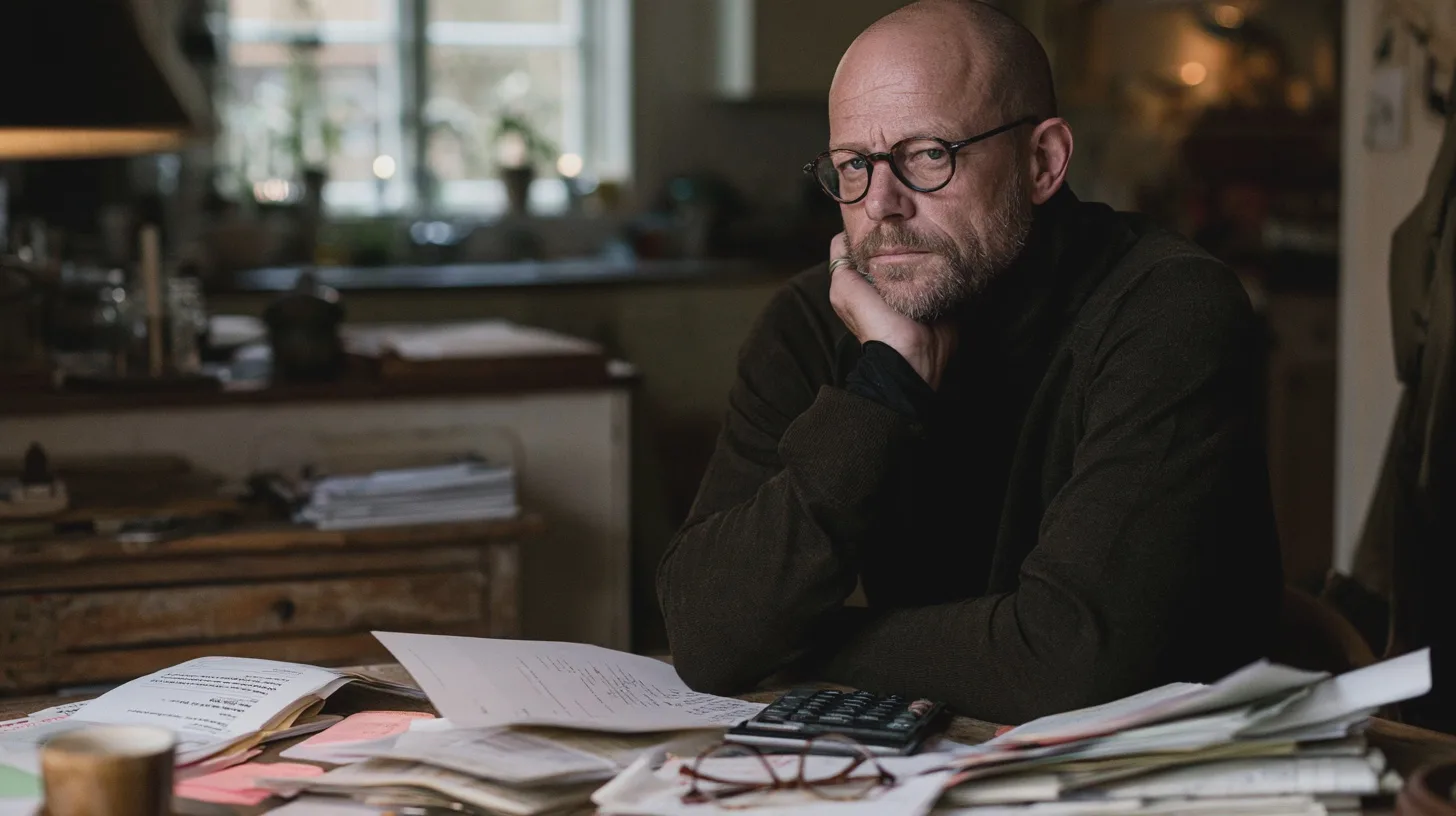
You retire, the pension money starts arriving and you assume the tax is being dealt with. That’s the whole point of PAYE, isn’t it? Then one autumn a letter turns up from HMRC saying you owe £1,900, and that they’d like it back.
Nobody did anything dodgy. The system just guessed, and it guessed wrong. Once you have more than one source of income in later life, a State Pension plus a workplace pension plus the odd drawdown, the odds of that get a lot shorter. Here’s how it goes wrong, and how to catch it before HMRC does.

Why does HMRC get pension tax wrong?
Income Tax on pensions runs through PAYE, the same system that taxes a salary. Each pension provider deducts tax using a tax code that HMRC issues. The code tells them how much tax-free Personal Allowance to give you before tax starts.
The Personal Allowance is £12,570, and it’s frozen until April 2031. You get one allowance, however many incomes you have. If two payers both think they should be giving you the full allowance, you end up with roughly £25,000 tax-free when the real figure is £12,570. Nobody notices until the end of the tax year.
The State Pension makes this trickier. It’s paid gross, with no tax taken off. HMRC collects the tax on it by cutting the allowance on your other pension instead, which only works if HMRC has your figures right.
A worked example: the State Pension squeeze
From April 2026 the full new State Pension is £241.30 a week, or about £12,548 a year. That uses up nearly all of a £12,570 allowance, leaving roughly £22.
Say you also get a £10,000 workplace pension. Almost all of it should be taxed at 20%, which in England, Wales and Northern Ireland comes to about £1,995 a year. Your workplace pension code should therefore be tiny, nearly zero, so that tax comes off every payment.
Now say your provider is using the standard 1257L code because HMRC never got the full picture. In that case almost nothing gets deducted. By the end of the tax year you owe close to £2,000, and that is the P800 letter in the opening paragraph.
In Scotland the rates and bands are different: 19% starter, 20% basic and 21% intermediate before the higher rates begin. Your exact bill will be different there, but the problem works the same way. Scottish codes start with S and Welsh codes with C.

Emergency tax on pension withdrawals
This one catches a lot of people. Since the pension freedoms you can take money flexibly from a defined contribution pot, through drawdown or as a lump sum. Usually the first 25% is tax-free and the rest is taxed as income.
The first time you take a taxable payment, the provider often has no up-to-date tax code for you. So it applies an emergency code on what’s called a Month 1 basis. That means it treats the payment as if you’ll receive the same amount every month for a year.
Take £20,000 as a one-off and the system acts as if you’re earning £240,000 a year. Part of that payment gets taxed at 40% and part at 45%, even if your real income puts you firmly in the basic-rate band. The overpayment can easily run into thousands.
You’ll get the money back eventually. If you do nothing, HMRC should put it right after the tax year ends. If you’d rather not wait, there are three forms:
P55 if you’ve taken some of your pot but not all of it, and won’t take any more this tax year.
P53Z if you’ve emptied the pot and have other income, such as a job or another pension.
P50Z if you’ve emptied the pot and have no other income at all, not even benefits.
HMRC normally pays out within about 30 days of getting the form.
PAYE is a system of educated guesses. The person most likely to spot a bad guess is you.
What is a P800 and do I have to pay it?
A P800 is HMRC’s tax calculation. It’s sent after the end of the tax year, usually between June and the end of November, if HMRC thinks you’ve paid too much or too little through PAYE. It covers the tax year that ended on 5 April.
If you’ve been overpaid tax, the letter explains how to claim the refund. If you’ve underpaid, and owe less than £3,000 and still get PAYE income, HMRC will usually collect it through your tax code over the following tax year. Your monthly pension drops a bit for twelve months. If it can’t be collected that way, you’ll be asked to pay directly.
Don’t just accept it. Check the income figures against your P60s and pension statements. HMRC sometimes uses estimates, and they’re not always right, especially after a one-off lump sum. If something looks wrong, contact HMRC. Under some limited conditions, mainly where HMRC had the right information and didn’t act on it in time, you may not have to pay the arrears.
How do I check my tax code is right?
The quickest way is your HMRC Personal Tax Account, through GOV.UK or the HMRC app. It shows the tax code each payer is using, the income HMRC expects you to get from each, and any P800 calculations. You can update an income estimate there if it’s wrong.
Check it at a few key moments: every April, when the State Pension goes up; when you start drawing a new pension or take a lump sum; and whenever a coding notice (P2) arrives. Look for these warning signs:
Two incomes on 1257L. Only one payer should normally be giving you the allowance.
BR or 0T on your main income. BR taxes everything at basic rate and 0T gives no allowance at all. Both are fine for a second income but often wrong for your main one.
A K code. This means HMRC is adding income, often State Pension or untaxed interest, that’s bigger than your allowance. It isn’t necessarily wrong, but check it adds up.
Anything with W1, M1 or X after it. These mean an emergency or non-cumulative basis, which should be temporary.
For bigger decisions, such as how and when to draw a pension so the tax bill stays down, it’s worth talking to Pension Wise (free for over-50s with a defined contribution pension), MoneyHelper or an FCA-regulated financial adviser.
In short
Pension tax goes wrong when HMRC’s tax codes don’t reflect all your income. That usually means the State Pension wasn’t accounted for, your allowance got used twice, or emergency tax was charged on a first withdrawal. Emergency tax overpayments can be reclaimed with forms P55, P53Z or P50Z. Underpayments show up on a P800, often collected through next year’s tax code. Check your Personal Tax Account every April and after any withdrawal, so you find mistakes before HMRC does.
Sources

Midcent Money
Andrew Ingram writes about money for men 45 and over – the years when retirement starts to feel real and the decisions get bigger. Pensions and retirement planning, investing, savings, mortgages and tax: what changed, what it means for your plans and what's worth doing about it. No hype, nothing to sell, and a clear steer on when it pays to get personal advice.
One of Midcent's writers. Spotted something? Write to andrew@midcent.uk.