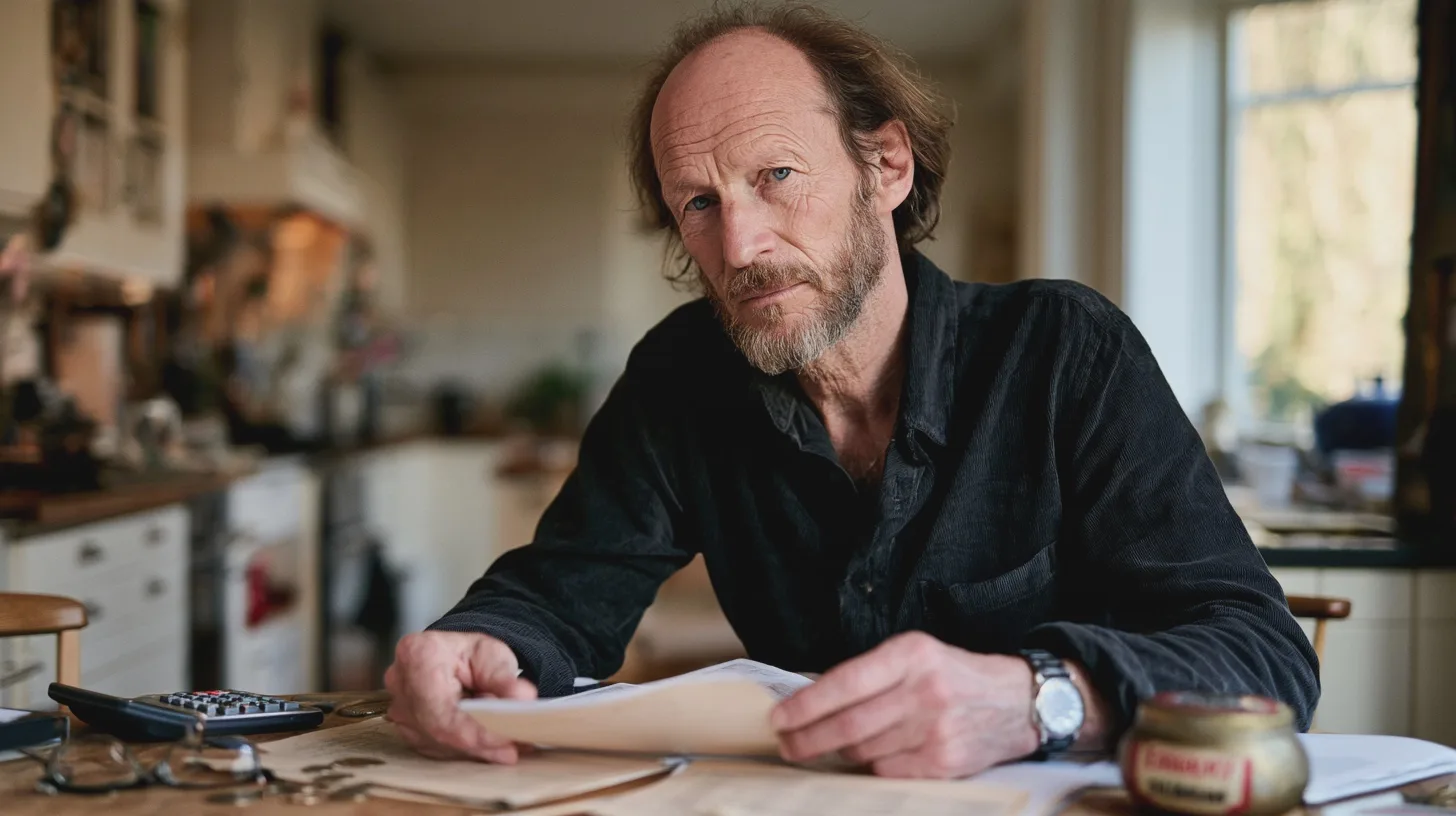
You’ve done the hard part. Twenty-odd years of payslips, a workplace pension or three, maybe an ISA you top up when you remember. Now you’re somewhere between 45 and 64, and retirement has gone from an abstract idea to a date you can roughly pencil in.
At this stage the biggest gains often come from stopping money leaking out, not from finding a clever new place to put it. Charges you’ve never looked at, cash sitting in the wrong place, risk that no longer suits you and a withdrawal plan that hands HMRC more than it needs to. Here’s where to look.

How much are fund charges really costing me?
Probably more than you think, because almost nobody reads the paperwork. Every fund you hold through a pension, SIPP or stocks and shares ISA publishes an Ongoing Charges Figure, or OCF. It covers the manager’s fee plus the running costs of the fund, and it comes out as a percentage of your money every year, whether the fund has a good year or a bad one.
The FCA has spent years pushing the industry to make this clearer. It found that firms quoting the narrower annual management charge in one place and the OCF in another made it hard to compare like with like, and it has since required fuller disclosure of costs, including the transaction costs of buying and selling inside the fund. The trick for you is to add everything up: the fund’s OCF, any platform or administration fee, and any ongoing adviser charge. That total is your real annual cost.
Then turn it into pounds, because percentages flatter. On a £100,000 pot, 0.25% is £250 a year. 1% is £1,000. 1.5% is £1,500.
Over time the gap compounds. Assume £100,000 grows at 5% a year before charges for 20 years. With total charges of 0.25%, you’d end up with roughly £252,000. At 1%, about £217,000. At 1.5%, about £196,000. That’s a difference of around £56,000 between the cheapest and dearest, for doing nothing differently except paying more.
None of that means cheapest is automatically best. A pricier fund or a good adviser can earn their keep. But you should know what you’re paying, and be able to say what you’re getting for it.
Percentages sound small. Turn your charges into pounds a year and suddenly they have your full attention.
What about old workplace pensions?
If you’ve changed jobs a few times, you may have small pots scattered around. Workplace pensions used for auto-enrolment have their default funds capped at 0.75% a year in charges, which is a useful backstop, but older schemes and pots you’ve moved yourself into a SIPP may not be covered by that cap.
Dig out each statement and note three things: the value, the total charges, and the fund it’s invested in. Some people consolidate into one pension for simplicity and lower fees. Before you move anything, check for exit penalties and, crucially, for valuable guarantees such as a guaranteed annuity rate or a protected tax-free cash entitlement. Those can be worth far more than a fee saving, and once you transfer out they’re gone. Final salary (defined benefit) pensions are a different animal entirely, and transferring out of one worth £30,000 or more legally requires regulated advice.

Is my money in the right place for my age?
Two questions here: is there enough cash, and is there too much?
Before investing more, make sure you have an emergency buffer in easy-access savings. A common rule of thumb is three to six months of essential spending. Without it, a boiler, a redundancy or a car that dies on the M6 can force you to sell investments at a bad moment, or borrow on a credit card.
But cash beyond that buffer, left for years in a current account, is a slow leak of its own once inflation is taken into account. If money won’t be needed for five years or more, it’s worth thinking about whether it should be invested instead.
Then look at the risk in your pension. Many workplace default funds automatically shift you from shares into bonds and cash as you approach a target retirement date. That made sense when most people bought an annuity at retirement. If you plan to keep your pot invested and draw from it gradually, possibly for 25 years or more, de-risking too early could cost you growth. Check which date your scheme has assumed, and whether it matches your plans.
If you opened a Lifetime ISA before your 40th birthday, you can keep paying in up to £4,000 a year and collecting the 25% government bonus until you turn 50. You can’t open one after 40. Remember that taking money out before 60 for anything other than a first home or terminal illness triggers a 25% charge, which wipes out the bonus and some of your own money.
When can I take my pension and the State Pension?
The State Pension age is currently 66 and is rising to 67 between 2026 and 2028, so if you were born after early 1960 you’ll wait a little longer. Get a State Pension forecast on GOV.UK and check your National Insurance record for gaps. Plugging a missing year can be one of the better-value moves around, though it doesn’t help everyone, so check first.
For private and workplace pensions, the earliest you can normally access your money is 55, rising to 57 from 6 April 2028. Plan your dates around that.
How do I avoid paying too much tax in drawdown?
Drawdown leaks happen at the point of withdrawal. You can usually take 25% of your pension tax-free, up to a lifetime limit of £268,275 for most people from the 2024/25 tax year. The rest is taxed as income in the year you take it.
Take a big chunk in one go and you could push yourself into the higher-rate band, or beyond. Spreading withdrawals across several tax years, and using your personal allowance each year, can mean far less tax. If you live in Scotland, remember withdrawals are taxed at Scottish income tax rates and bands, which differ from those in England, Wales and Northern Ireland.
Watch the money purchase annual allowance too. Once you take taxable income flexibly from a pension, the amount you can pay into pensions with tax relief drops from £60,000 to £10,000 a year. Awkward if you’re still working and saving hard.
And from 6 April 2027, most unused pension pots are due to count towards your estate for inheritance tax. That changes the old assumption that pensions are always the last pot to spend, so your withdrawal order may need rethinking.
If you’re 50 or over and have a defined contribution pension, you can book a free Pension Wise appointment through MoneyHelper. For decisions about transfers, drawdown or inheritance planning, an FCA-regulated financial adviser can look at your whole picture.
In short
After 45, the biggest wins usually come from plugging leaks rather than chasing returns: add up your total charges in pounds, track down old pensions, keep a cash buffer but not too much idle cash, and check your risk level still suits your plans. Then think carefully about when and how you’ll draw your pension, because timing and tax can matter as much as investment growth. For big decisions, use Pension Wise or an FCA-regulated adviser.
Sources

Midcent Money
Andrew Ingram writes about money for men 45 and over – the years when retirement starts to feel real and the decisions get bigger. Pensions and retirement planning, investing, savings, mortgages and tax: what changed, what it means for your plans and what's worth doing about it. No hype, nothing to sell, and a clear steer on when it pays to get personal advice.
One of Midcent's writers. Spotted something? Write to andrew@midcent.uk.