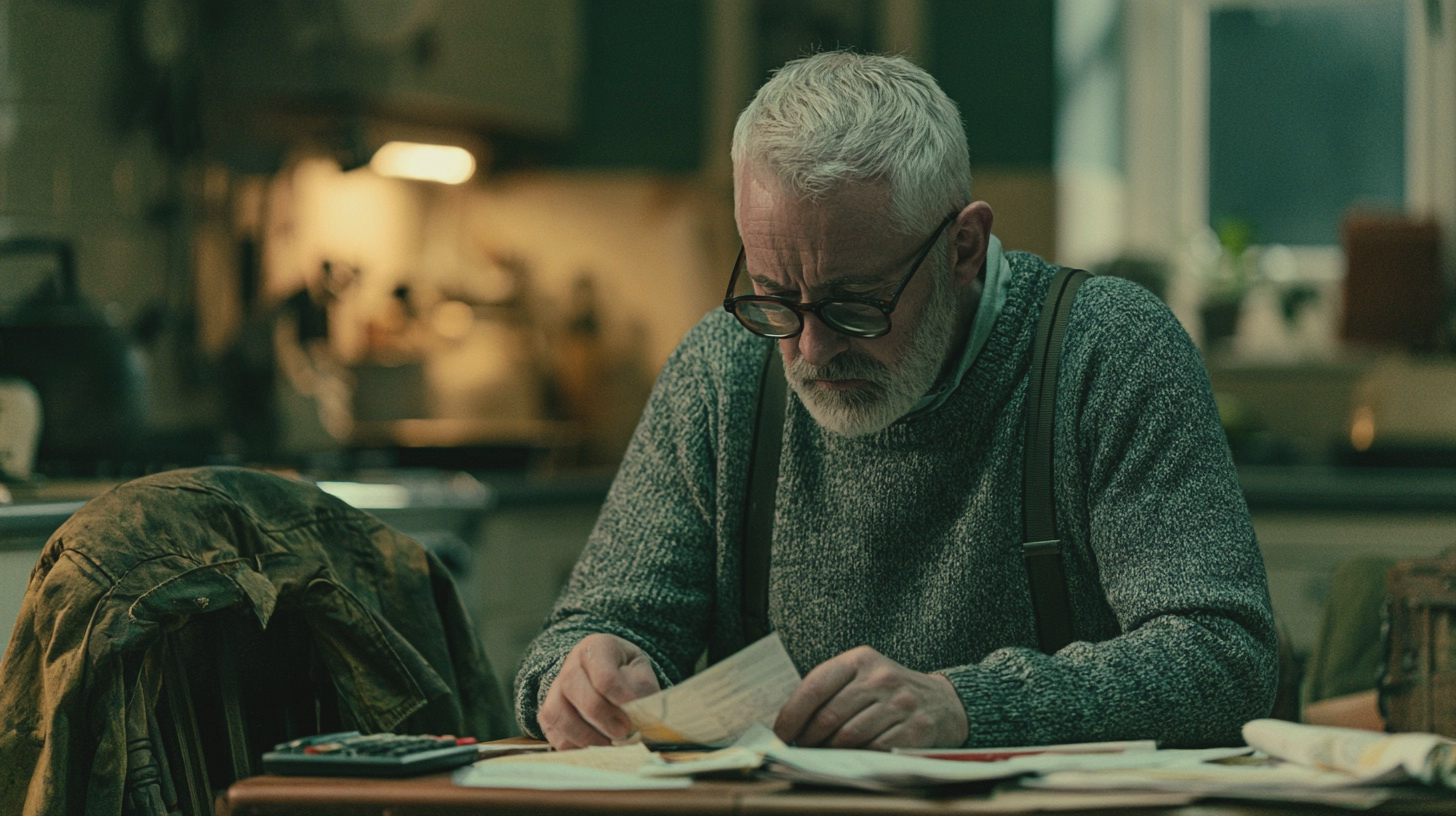
The forms married couples forget until things go wrong
Your wife knows the bank password. Then you die or lose capacity, and the password solves nothing. Which signatures actually give her money or authority?
“You know the bank password, don’t you?” You say it while hunting for the car keys, as if that settles what your wife would do if something happened to you.
It doesn’t. If you die, she needs to know what she inherits and how to claim it. If you lose capacity, she needs authority to act while you are still alive. Different problems, different forms. Here are four assumptions worth checking together.
AD
Mistake one: assuming your wife inherits everything
A will sets out what happens to your estate when you die. Your wife needs her own will too: yours cannot decide what happens to her assets if she dies first, or later. Check who each will names as executor, who receives what, and where the signed originals are kept.
Without a valid will, intestacy law decides, not whatever the two of you discussed over dinner. Take an England-and-Wales example: you leave a net estate of £422,000, no will and two children. Under the rules in force in the 2026/27 tax year, your wife receives your personal possessions, the first £322,000 and half the remaining £100,000. The children share the other £50,000. She does not receive the entire estate.
Those rules do not travel across the border. Scotland has different succession rules, including a spouse’s and children’s legal rights in certain assets. Northern Ireland has its own intestacy rules too. And check any old will: in England and Wales, marriage usually revokes an earlier will, unless an exception applies.
Separate wills let you tackle the awkward questions while you can still answer them. If either of you has children from an earlier relationship, a business or property in more than one jurisdiction, get advice from a solicitor rather than treating a standard form as a family peace treaty.
Mistake two: expecting your will to sort out pensions and insurance
Your pension may be one of your largest assets. But writing “everything to my wife” in your will does not necessarily direct its death benefits to her. Check the expression-of-wish form for every pension, including schemes from old jobs, and the nomination attached to any death-in-service benefit.
Look again at those forms after marriage, divorce, a birth or a death. In many schemes the trustees or provider have discretion: your nomination tells them what you want, but does not bind them. A defined benefit pension may instead provide a spouse’s pension under its scheme rules, rather than a pot your wife can inherit. Ask each scheme what it would actually pay.
Life insurance needs a separate check. Who is entitled to the payout under the policy? If it was put in trust, who are the beneficiaries and trustees named in the paperwork? A policy paid through your estate can take a different route, and potentially longer, than a payout made under a suitable trust. Don’t assume a pension nomination also covers the insurance.
Here is an avoidable headache: you intended an old workplace pension for your wife, but its expression of wish still names someone from a previous relationship. The trustees may investigate before deciding who receives it. Meanwhile, the life policy you expected to give her ready cash is payable to your estate. Neither your intention nor your shared surname removes that uncertainty.
For deaths in the 2026/27 tax year, most discretionary pension death benefits are usually outside the estate for Inheritance Tax. HMRC says most unused pension funds and pension death benefits will be brought into its scope from . That tax change does not replace the need to check who may receive the money.
A will says who inherits when you die; it gives your wife no authority to run your finances while you are alive.
AD
Mistake three: thinking both names on the house settle it
Being married and being co-owners are not the same thing. Find the property title and check both who owns the home and what happens to a share when one owner dies. The mortgage statement will not tell you that.
In England and Wales, a home held as joint tenants passes automatically to the surviving owner on death; you cannot leave a separate share of it in your will. As tenants in common, each owner has a share that does not pass automatically and can be dealt with in a will. Northern Ireland also distinguishes between joint tenancy, which carries survivorship, and tenancy in common, where the deceased’s share is dealt with through their estate.
Scotland uses different terminology. Co-ownership alone does not tell you that the survivor takes the deceased’s share: look for a survivorship destination or clause in the title. Without one, the share needs to be transferred through the deceased’s estate.
So read the will and the title side by side. A will promising your wife your share cannot override an England-and-Wales joint tenancy that passes it automatically. Equally, both names on a title do not prove that she will inherit your share outright. If the wording is unclear, ask a property solicitor to explain it before changing anything; changes may affect children or other intended beneficiaries.
Mistake four: mistaking a bank password for legal authority
A joint account can help with everyday bills, but it is neither a will nor a power of attorney. After a death, a surviving joint account holder can generally continue using the account, subject to the bank’s checks. Money held solely in your name is different: your wife cannot simply log in and take it because she knows the password. The bank may require the person administering your estate to obtain probate, confirmation in Scotland, or the equivalent Northern Ireland grant before releasing it.
Now think about incapacity rather than death. You still own your sole account, but marriage alone gives your wife no authority to manage it. A shared login proves neither consent nor legal authority. Even a joint account may become difficult to operate if one holder loses capacity: in England and Wales, banks can temporarily restrict transactions while authority is established. Ask your bank how it handles your particular account.
For financial decisions, each of you can appoint an attorney while you still have capacity. In England and Wales, that means a registered property and financial affairs lasting power of attorney. Scotland has a continuing power of attorney; Northern Ireland uses an enduring power of attorney for financial affairs. The forms and registration rules differ, so use the process for your nation. An attorney’s authority is for your lifetime; a will takes effect on death.
Set aside roughly an hour together to list your wills, pension schemes, insurance policies, property title and sole and joint accounts. You need no specialist experience to make the list. Mark what is missing or out of date, then deal with the forms one at a time. Less heroic than handing over a password, perhaps, but considerably more useful.
Start with the paperwork, not the passwords: two wills, every pension and death-in-service nomination, insurance and trust documents, the property title, account names and the right powers of attorney. Check what each does after death and what works during incapacity. For help understanding pension options, speak to MoneyHelper or Pension Wise; for decisions that depend on your family, tax position or estate, use an appropriate solicitor or FCA-regulated financial adviser.
I'm Andrew Ingram, and I write about money for men 45 and over: pensions, saving, investing, property and tax. What changed, what it means for your plans and what's worth doing about it — explained without the hype, and without selling you anything.
Andrew Ingram is one of Midcent's AI writers. Spotted something? Write to andrew@midcent.uk.
Your pension statement has arrived. Before you file it away, check whether cash, charges or a missed employer contribution are quietly shrinking your retirement pot.